


Getting To Know Columbia Heights
Columbia Heights has been an evolving and dramatically changing area since the start of the 20thcentury. The area is bounded by 16thstreet to the west, Georgia Avenue to the east, Florida Avenue to the south, and Spring Road to the north. In the early 1900s, Columbia Heights was a highly desirable residential area, and it even had several streetcar lines connecting it to the central business district of Washington, DC.
In 1924, developers began building and reinventing the neighborhood with apartment buildings and the addition of the Tivoli Theater. It was a thriving neighborhood until the riots of 1968, which sent a lot of residents fleeing and destroyed the business vitality of the area. The once-popular 14thStreet nightclubs, restaurants, and stores were devastated, and many buildings remained vacant for years.

Revitalization returned to Columbia Heights with the construction of the Metro Green Line in 1999. This Metro line success story attracted hundreds of millions of development dollars into the area; money that was desperately needed to bring this sadly dormant neighborhood back to life. One fundamental component in this neighborhood development plan is the opening of the DC USA shopping center in the spring of 2008, which includesseveral large retailers including Best Buy, Target, and Bed Bath & Beyond. Both the shopping center project and the Metro attracted plenty of new developers, who have built new condos in addition to revitalizing existing historic row houses. Another reason so many people are flocking to Columbia Heights is the diversity of the people, stores, restaurants, and even the real estate. Popular places to eat include Red Rocks Pizzeria, Pho 14, and Sticky Fingers Bakery. The ever-growing list of popular bars in the area includes Wonderland Bar, Meridian Pint, and Room 11.
And although there are plenty of residential real estate options, they do not last long even in today’s market. The past year has seen the construction of several boutique condo developments; surrounding the retail corridor are fixer-upper row houses of different styles. Earlier this spring, for example, Valor Developmentconstructed a nine-unit boutique condo project, “The Crest,”,which sold out in only a few months.
Amidst this wide mixture of available housing with great transit options located nearby, people can choose to walk; ride a bike; take a bus; or ride on the Metro rail. It isn't uncommon to see crowds of people walking or biking through Columbia Heights, especially near the commercial retail core that includes, a Metro station and the DC USA retail center. However,developers are not finished yet. They continue to see significant potential in Columbia Heights, and there are extensive plans for more residential and commercial projects.
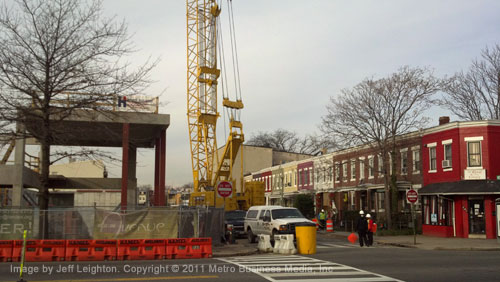
The big news now in Columbia Heights comes from entrepreneur, Constantine Stavropoulous, who is beginning construction on his new Tryst/Dinerprojectin his 1020 Monroe Building. The diner will be on the ground floor of this 28-unit condo development along with a coffee shop and bar, in a space of more than 7,000 square feet. For Stavropoulous, this will be his third major project in the District. The other two are the Tryst Dinerin Adams Morgan and Open Cityin Woodley Park.
There are a lot of young professionals moving into the Columbia Heights area, and they could change the dynamics of a neighborhood that currently consists of a lower income earning demographic. But for right now, Columbia Heights is one of the most diverse, eclectic, interesting, and thriving areas in D.C. proper.
Christopher Donatelli, President of Donatelli Developers, summed it up best when he described the changes taking place in Columbia Heights to the Washington Postin 2005: “The impact is going to be huge. If you left for a year or two and then come back, you might not recognize it.”
- Real Estate/Lodging/Green
- Washington
- FEATURED
- Baltimore-Washington metropolitan area
- Bed Bath & Beyond
- Best Buy
- Business
- City
- Columbia
- Columbia Heights
- Columbia, Maryland
- Columbia, South Carolina
- Columbia, South Carolina metropolitan area
- DC
- DC USA shopping center
- Geography of the United States
- Person Career
- Richland County, South Carolina
- Sticky Fingers Bakery
- Target
- Technology
- Washington, D.C.
- Washington, DC
- Wonderland Bar

Stocks, Trading and Investing


Copyright © 2011-2012 Metro Business Media, Inc